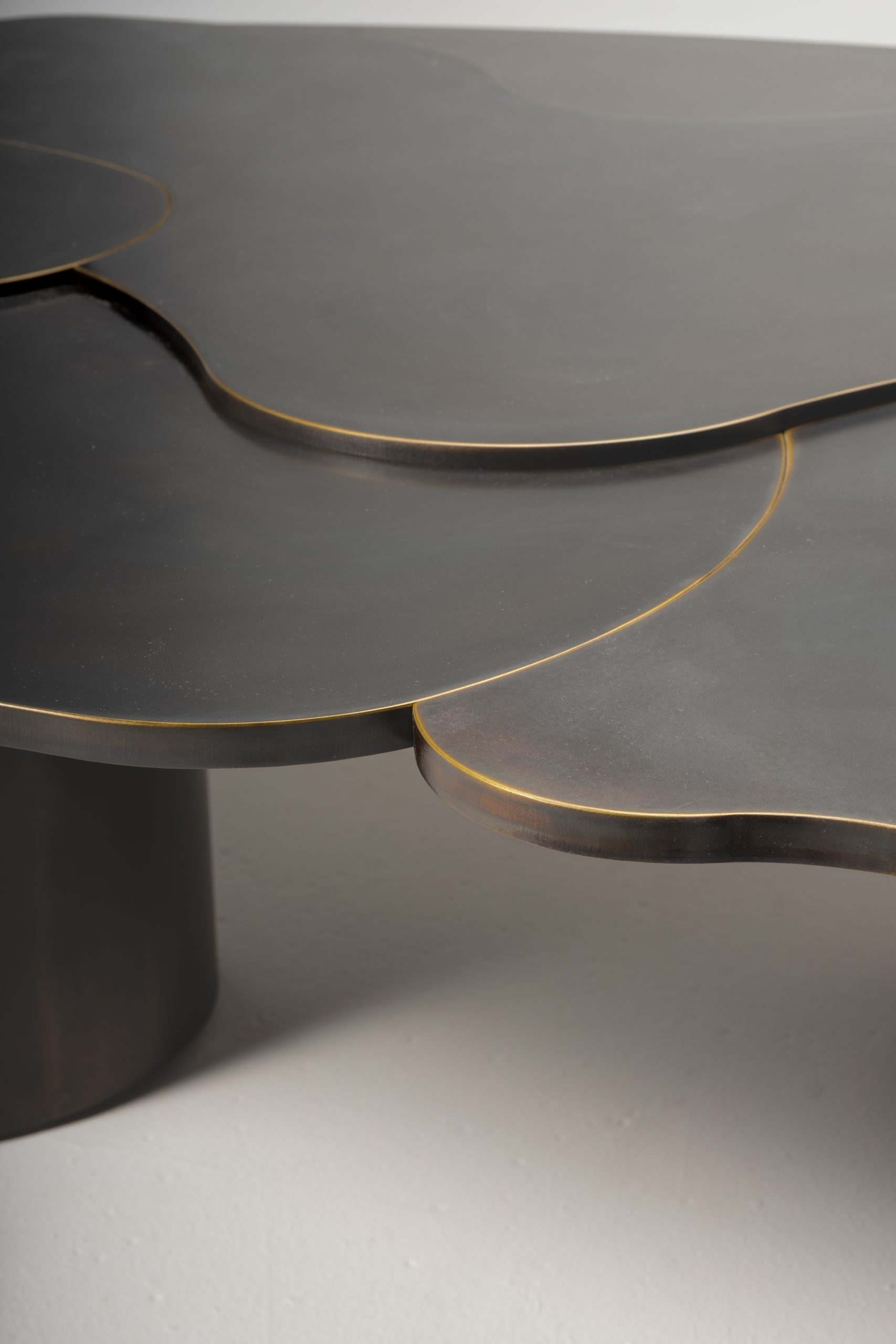
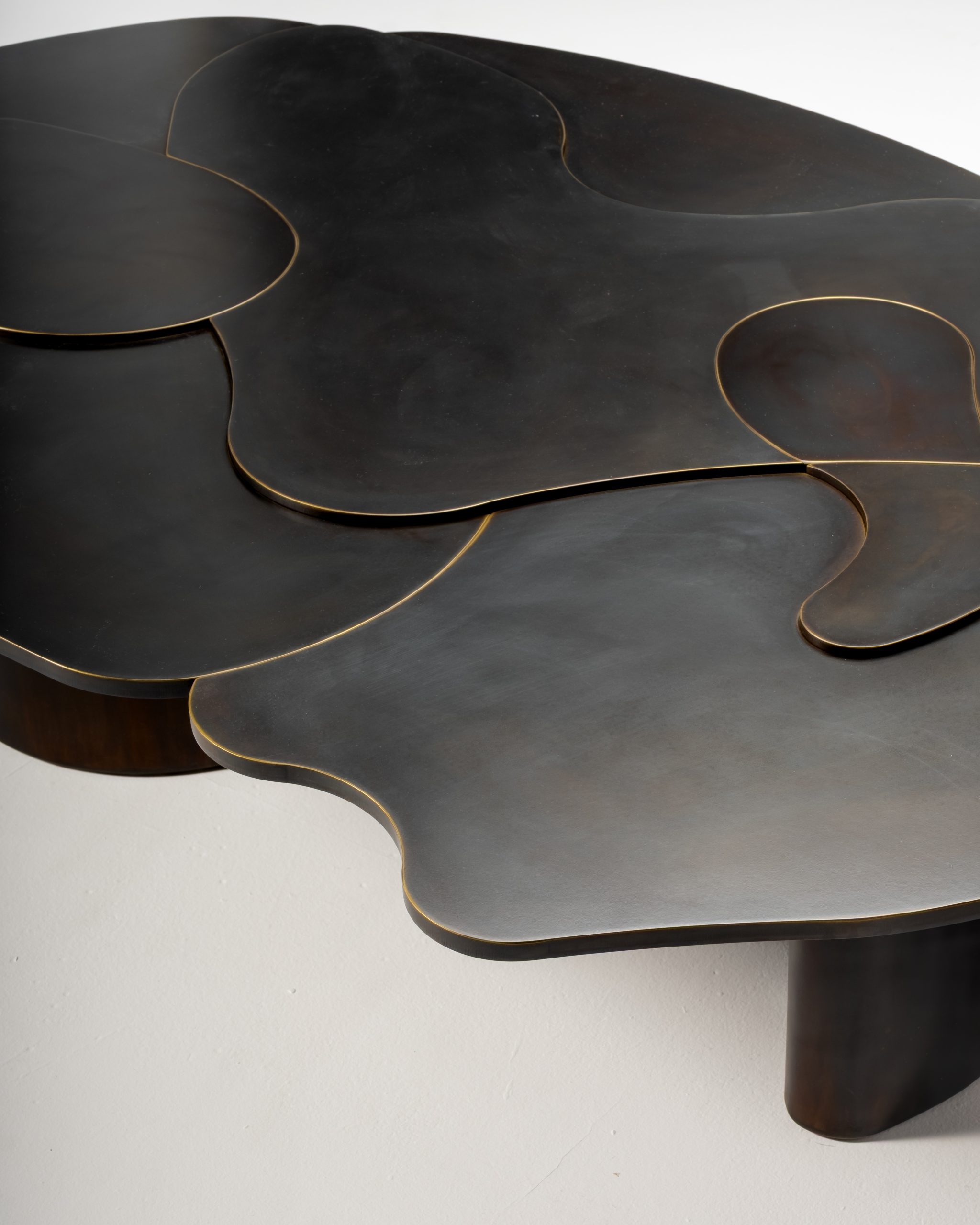
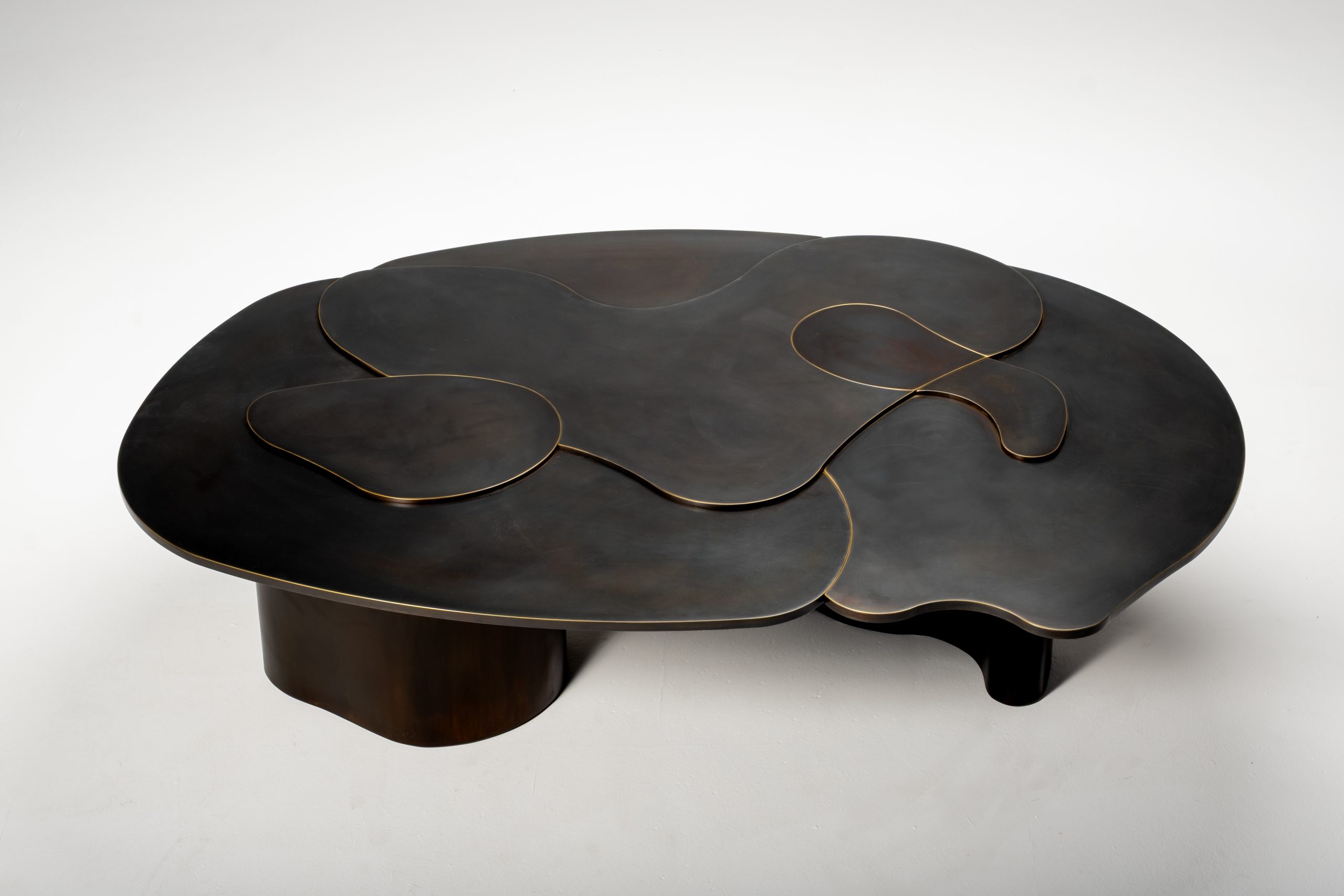

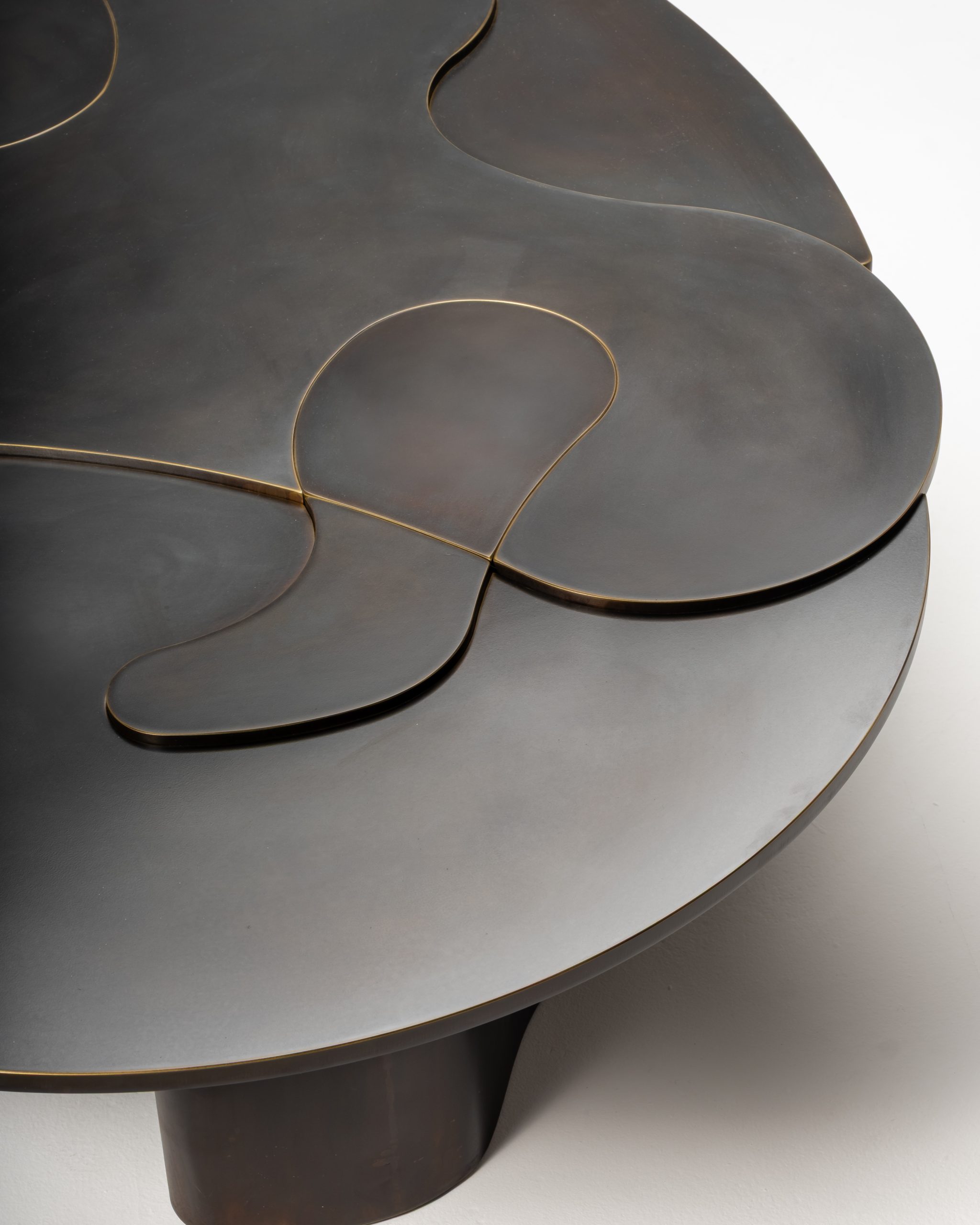
Terralis A commission with Ben Barber Studio
Finding the form
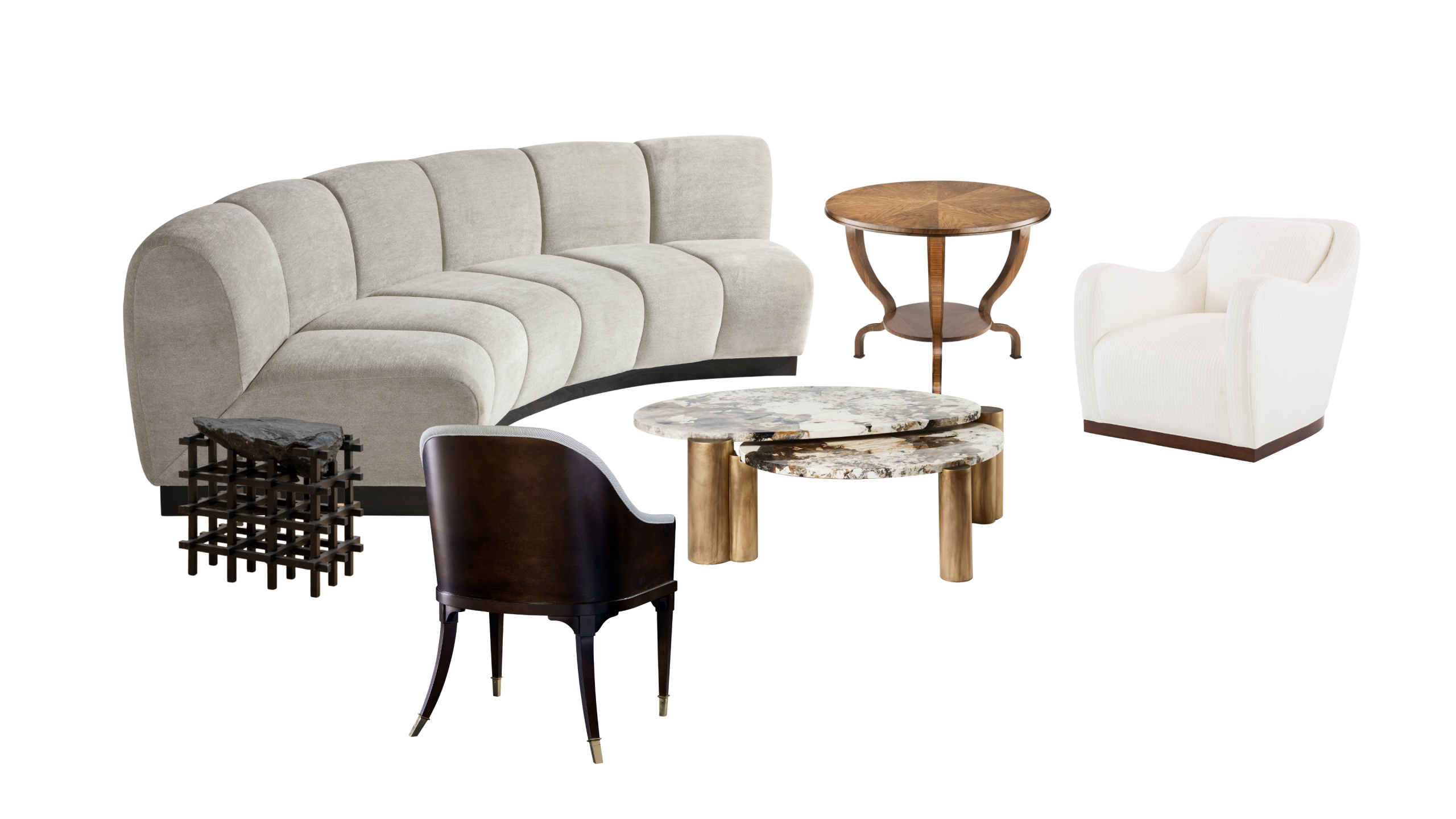
The starting point was the living room itself. Between a curved Vladimir Kagan Biscuit Sofa and the credenza opposite, we needed a coffee table with a particular balance of proportions: generous enough to serve the seating, while leaving an easy path into the room.
Ben Barber’s Xenolith offered a promising starting point. Its near-oval silhouette, curved along one side and flatter along the other, suited the arrangement. The full composition of two nesting tables occupied more space than we needed, so we explored using the larger table alone. Reversing its orientation brought the narrower end toward the approach to the seating area, keeping it open and welcoming, while the fuller, rounded end served the swivel chair in the opposite corner.
From stone to brass


Material became the next question. A large oval dining table in white Carrara marble stood nearby, and our client preferred not to introduce another stone tabletop in such close proximity. We agreed and began exploring brass.
At the time, we were particularly drawn to Vincenzo de Cotiis’s work, especially the coffee tables we had been exploring through Carpenters Workshop Gallery. Their use of metal and biomorphic forms helped shape the direction we wanted to pursue for this room.
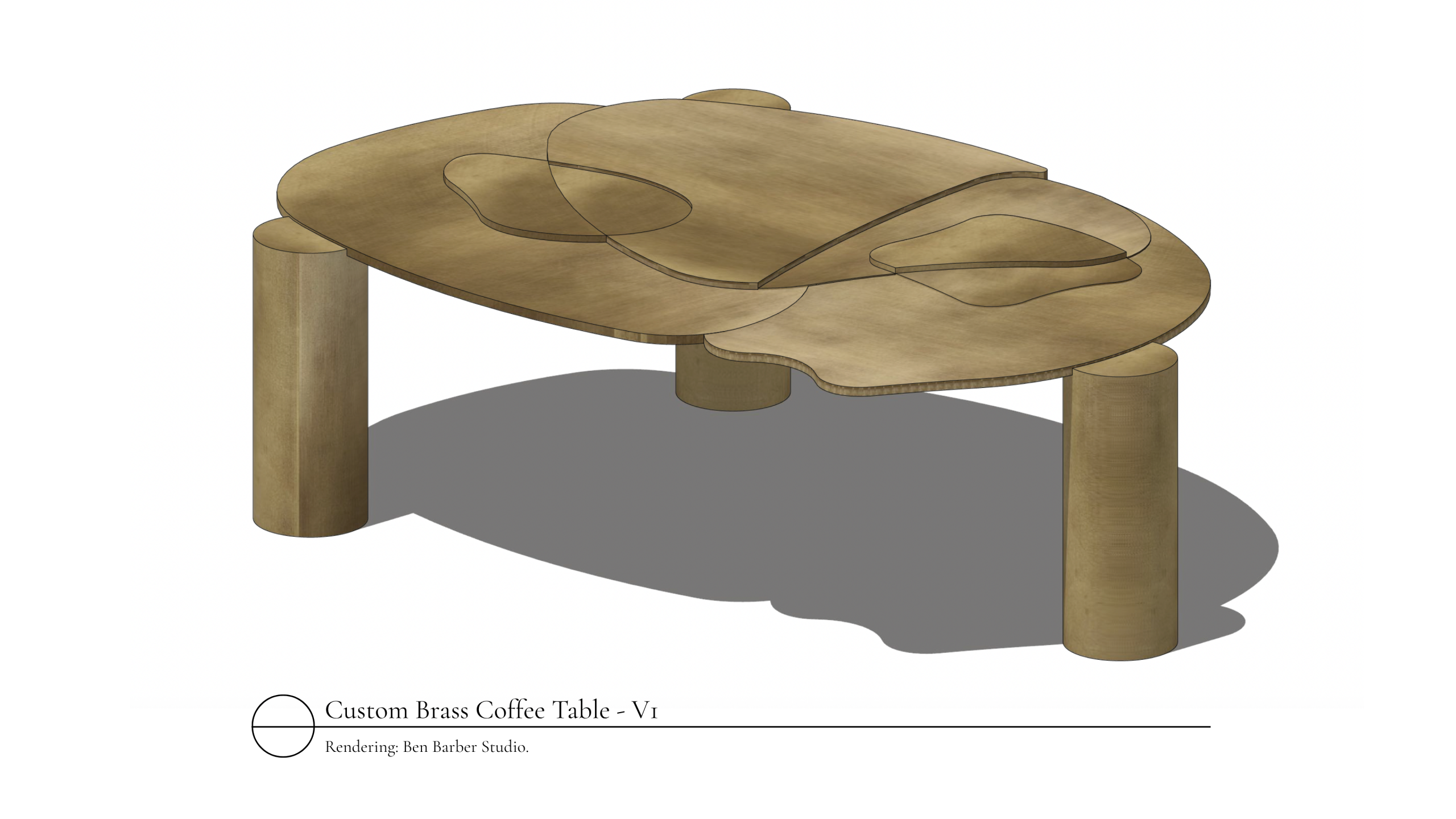
Through The Future Perfect LA, we shared those references and an early drawing proposing a layered brass tabletop, inviting Ben to develop the idea through his own practice. The conversation brought together these influences with the room’s particular proportions, furnishings, and palette. What began as an inquiry about adapting the Xenolith gradually developed into the custom commission that would become the Terralis Coffee Table.
Refining the design
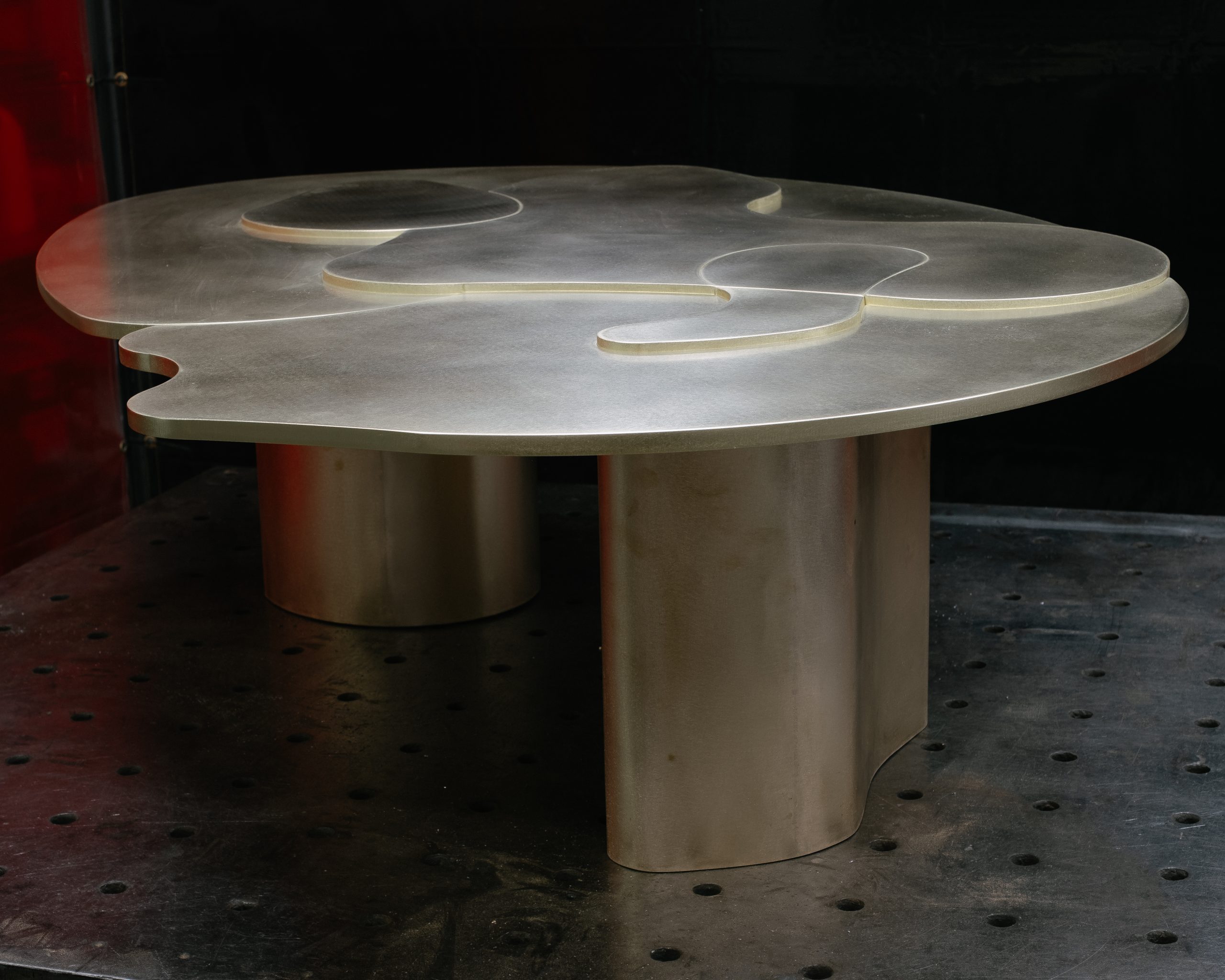
Ben’s initial proposals introduced a sculptural composition with two possible approaches to the base. We were drawn to the plinth legs and the way they appeared to pierce the tabletop, carrying their shapes into its surface.
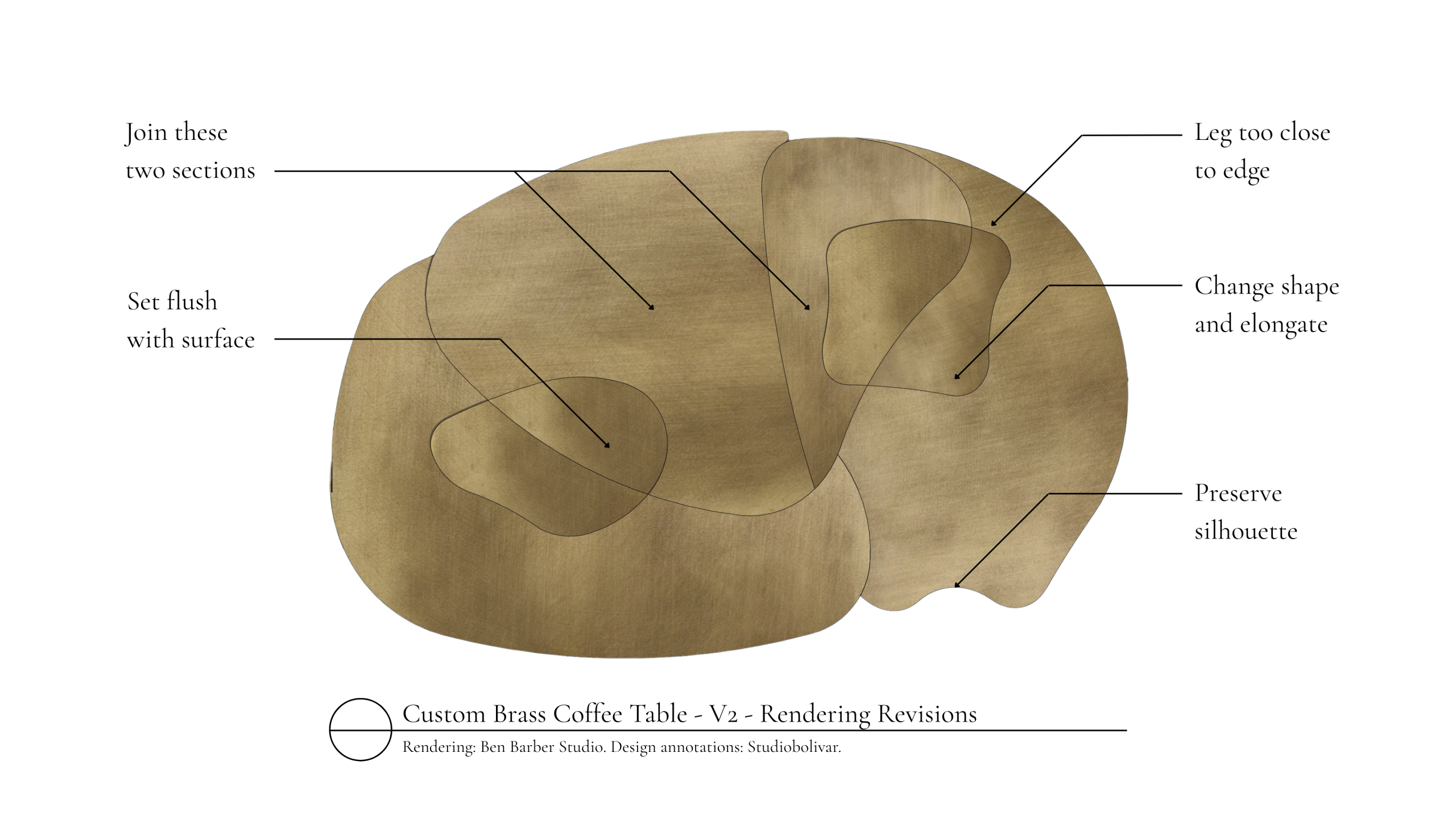
Working from his drawings, we developed revisions that preserved the overall silhouette while adjusting the balance and usability of the piece. The right-hand support felt visually heavy and too close to the edge; the left needed to meet the tabletop flush to avoid a recessed pocket. We also proposed joining two central areas into a more continuous surface, giving objects a place to sit within the layered composition.
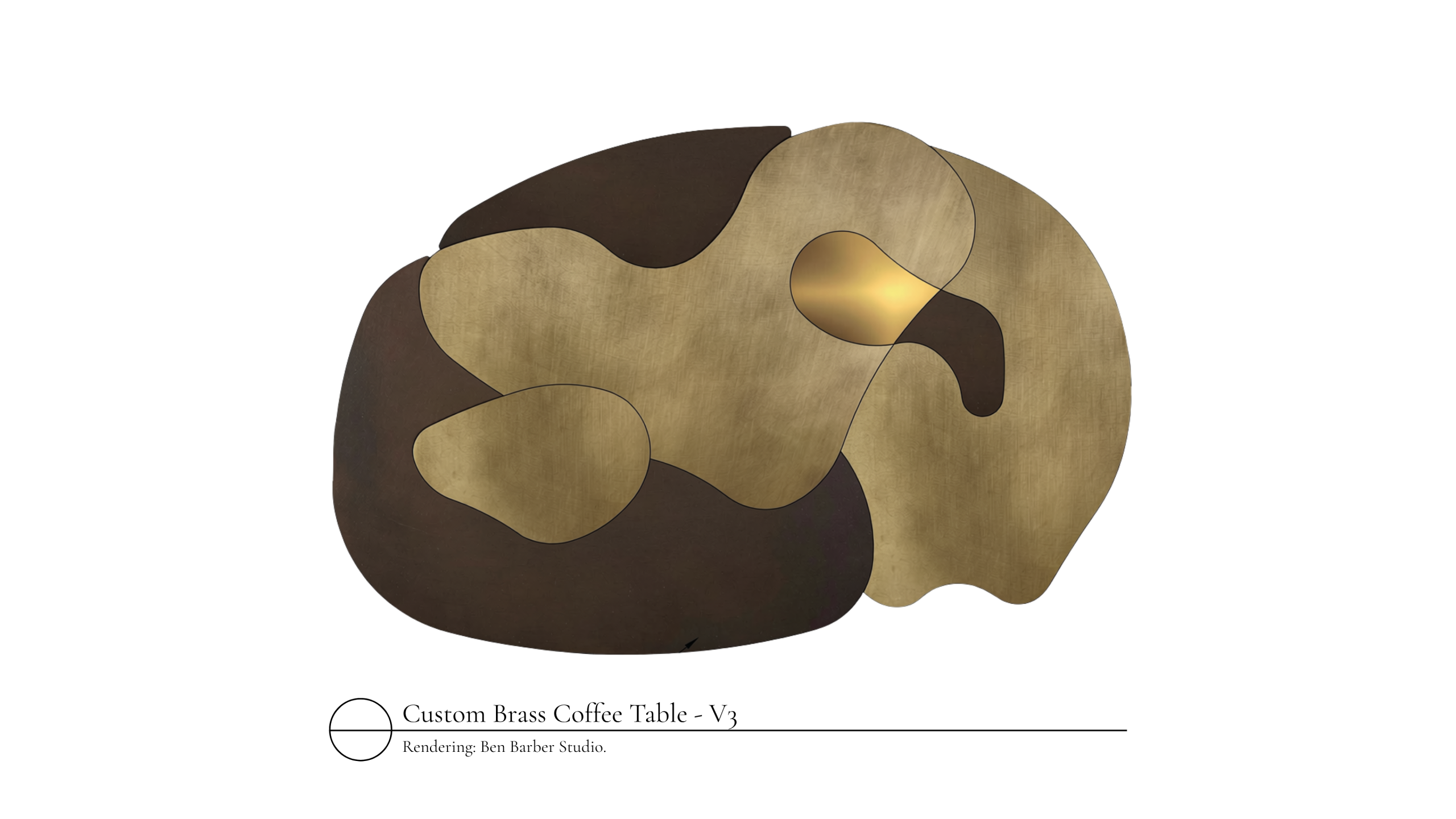
We sent annotated images and a revised drawing to communicate these changes. Ben incorporated the revisions into his drawings, and a further conversation brought the form and proposed finish combinations together.



Bringing the piece to life
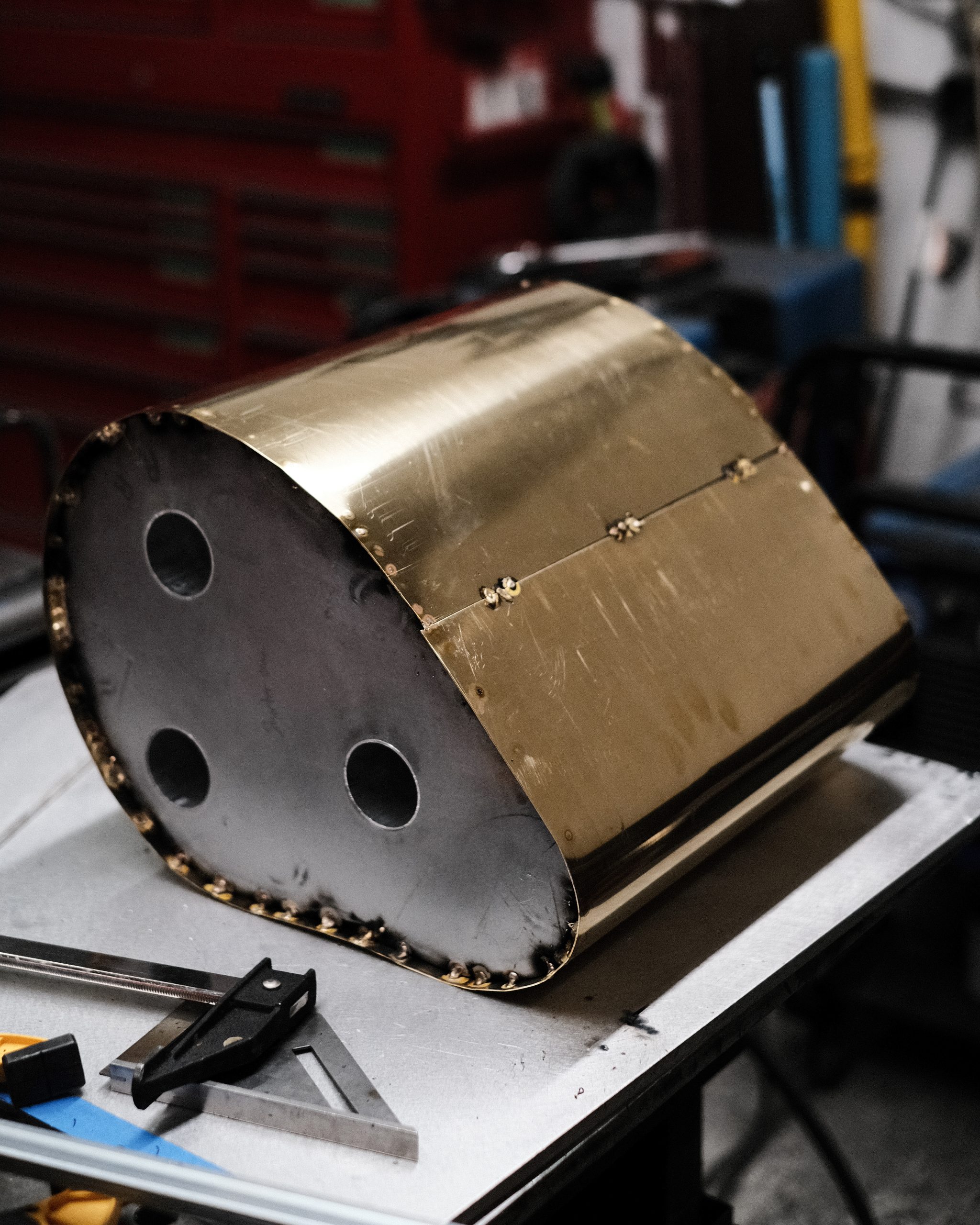
Ben’s studio took the developed design into fabrication, with brass components cut by waterjet and assembled through welding. Alongside the making, we continued to explore how the finishes would bring out the relationships between the table’s layered surfaces.



Finding the finish
Physical samples and photographs guided that exchange. We selected finishes and their placement, then revisited the patina as the piece progressed. Ben recommended a subtler treatment, allowing the movement within the composition itself to remain prominent.
For the dark patina, we ultimately chose a predominantly black finish, with lightly burnished edges revealing the brass beneath. The decision emerged through that dialogue: our vision for the room, informed by his knowledge of the material and its possibilities.


Living with the design
